Tuesday, 29 November 2011

DECEMBER 12th [Science Comedy Advent Calendar]


December 12th: The Fovea

Christmas. There’s a lot more that goes into it than one person can feasibly experience. The amount of preparation involved in acquiring gifts, all that food to get, cook, and give to people who may well be too intoxicated to recognise what it is they’re consuming.  The decorations, the work scheduling to get it all organised, the arrangements, the visits. A lot of effort by one part, which may be experienced as nothing more than a brief visit and an exchange of pointless Christmas cards by another party. It’s tragic, in a way.

And that’s just on a small-scale, individual family basis. What about the industrial processes that go into the whole festive season? Christmas seems to have a profound effect on the whole economy, it’s reported in the news, with constant update son how the high-street is doing. And think of the manpower that goes into converting every branch of every multinational into a more ‘festive’ style. Even the fictional aspects, the Santa and his elves thing, if that were true, it would involve countless hours of manual (‘elf’ual?) labour and the violation of spacetime by a bearded fat man; and for what? This herculean effort is experienced by individual children as a period of excitement and the acquisition of a few more flimsy toys. Is that really all it amounts to?

This shouldn’t be surprise though, seeing as humans experience such a thing on a regular basis. Our own eyes and brains are actually capable of experiencing only a small fraction of the visual stimulus that constantly bombards us. You’d probably assume that our eyes encode the visual scene we experience in much the same way as a camera processes an image; light goes in, gets moved around a bit, then sent to the brain/film/memory card. But no, not the human eye.

When it comes to fine detail, the sort of useful, accurate, specific processing is limited to an alarmingly small area. It’s the fovea, the part of the eye that’s most densely packed with photoreceptors (only cones, no rods, by the way). It can pick up on the small details, the finer points, and no other part of the eye can. It’s like a very small searchlight casting about through the fog of our visual sensory input. What we essentially do is use the fovea to focus (no pun intended) on things which our visual systems classify as worthy of attention. Visual psychology experiments have used tracking software to follow a person’s eye movements when looking at stimuli such as elaborate paintings. It’s interesting, the tracking pattern is like someone tried drawing the painting themselves on an etch-a-sketch while suffering serious drunken tremors.

But it’s enough. The brain can take this scattering of detailed glimpses and build up a detailed and, more relevantly, useful perception of the world itself. All from a part of the retina that’s no even a millimetre in diameter. Even for something as small in area as the retina, that’s a pretty pathetic amount of space given over to detailed perception, don’t you think? Especially when the periphery of the retina can’t even encode colour (our brain just infers it later in the processing stage, if you’re wondering).

But if you did think the fovea was a measly allocation of useful processing space, look at it this way; this measly bit of retinal space is sufficient to provide us with the sort of rich detailed vision we take for granted, despite the fact that it’s mostly the result of brain processing rather than direct sensation. You want more? Well, if the fovea were twice the diameter it is, we’d actually need brains the size of beach balls to handle the data input. And that wouldn’t be practical. We’d need crackers to have paper hats that were a lot bigger (there may also be other consequences, like needing bigger wigs if you’re a bald man).

So yeah, the effort that goes into making Christmas happen is just like our visual perception; far more is going on than we can actually perceive. But what we have, that is usually more than enough.

See, I can do schmaltzy too, just so you know.

Twitter: @garwboy

StumbleUpon.com

DECEMBER 11th [Science Comedy Advent Calendar]


December 11th: Kepler 22-b

For some, Christmas is all about the anticipation. What you're going to get, how other's are going to react to what you get them, will you get what it is you actually want, are you going to end up never speaking to certain family members again? The possibilities are what get some people worked up, to the point where the actual main reveal is something of a disappointment.

At the time of writing this, a similar situation exists in the astronomical community, as well as, to a certain extent, the 'understanding the universe and our place in it' community, although they can get a little theological/philosophical at times. The sort of people you would invite round for dinner, but wouldn't want them renting your spare room for fear of constant discussions about man's role in the grand scheme of life itself when all you want them to do is pay for some of the milk they keep stealing from you.

Recently, it was announced that the most Earth-like planet to date was discovered. Named Kepler 22-b, it's sparked a lot of debate and conversation about the ramifications of the possibility of life, the uniqueness of Earth, interest in space travel and numerous other things. Its location is known, it's in the right place to support life (by our standards, anyway) in the 'Goldilocks zone', it's bigger than Earth but not excessively so, and it's (by galactic standards) right down the road. But they don't know if it's made of mostly gas, rock or air yet (but judging by the name, they seem to know its cup size?) so it may be completely useless for what we 'want'?

This is the space science equivalent of the big chunky square present under the tree with your name on it. It could be the new laptop you've been going on about, it could be a new PS3 that you're sure you've heard a few hints about, or it could be a large pair of novelty pants in an oversized box.

Time will tell, but in many ways, the waiting ends up being the best part. That is sort of the point of advent calendars, in a way

Twitter: @garwboy


StumbleUpon.com

DECEMBER 10th [Science Comedy Advent Calendar]


December 10th: Trilobites

You get a lot of ‘stuff’ at Christmas, don’t you?  It’s different kinds of stuff, yes; But a lot of ‘stuff’, overall. Some of the stuff is very obviously Christmas stuff, some of the stuff is everyday stuff that is just receiving more attention than usual because it’s Christmas.

For example, cheap decorations (tinsel, baubles etc.) and red bobble hats = Christmas stuff. Vegetables, nuts and winter clothing = regular stuff that is rendered festive by the Christmas period. And this first part of this piece has the word ‘stuff’ in it far too much, doesn’t it?

That’s sort of the point though. What defines ‘stuff’? It could be argued that it’s the sort of thing that is encountered often and/or in large enough quantities that it breaches the point where the human mind finds it necessary to specify it in any detail. And we encounter this sort of thing often at Christmas.

The brain is quite good at filtering and generalising when presented with too much stimuli. “What did you get for Christmas?” “You know, stuff” (Pairs of socks/pants, deodorant, slippers if you’re of a certain age group).  Those chocolates you get in the big tins, the ones that have nougat or that hard crystallised stuff which nobody can identify, they’re generally lumped together as ‘leftover stuff’.  And so on.

Scientifically, stuff has a different meaning. Dark Matter, for example, is ‘stuff’ because it is impossible to specify. There’s lots of it (supposedly), but scientists are very keen to actually see the bloody stuff (although by definition, that should be impossible). However, scientifically speaking, it’s rare for a species to be classified as ‘stuff’.

If any has managed this bizarre achievement, it’s the Trilobite. One of the most abundant fossil types you’ll find, it’s more of a species type than an individual species. Trilobites arrived on the scene, life-on-Earth-wise over half a billion years ago, and hung around for at least a quarter billion years. In comparison, humans are just at the point where we’ve crawled out of the sea.

Trilobites.  They spread everywhere. They swam, they hunted, they filtered, they grazed, they may well have dressed up like bats and fought crime (although this is doubtful as this was long before the existence of bats, or crime as we know it, probably).

Then they died out, as things often do. With their exoskeletons and widespread antics, they left durable remains everywhere, becoming the fossil equivalent of a pair of socks at Christmas; not something you’re unhappy about getting, but it will probably be thrown aside while you seek out the ‘cool’ stuff.

But there will come a time when you need the socks, and while that games console is riddled with bugs and just causes frustration and headaches, the socks are always reliable and useful. Trilobites are a bit like that. Despite the fact that most lay people would think of them as fossil ‘stuff’ (if they think of them at all), trilobites have taught us an amazing number of things. Or ‘stuff’, if you prefer.

Trilobites and socks at Christmas; generally ignored, but we’d be complaining if they weren’t around. We’re so ungrateful as a species.

Twitter: @garwboy


StumbleUpon.com

DECEMBER 9th [Science Comedy Advent Calendar]


December 9th: Robert Liston

For your typical adult, Christmas always seems to fly by. This is probably a consequence of the ever increasing build-up to Christmas, which the commercial sector currently starts advertising some time around the summer solstice. With a build up that lasts for at least 2 meteorological seasons for something that lasts about 3 days (not counting the desperate Bacchanal that is New Years Eve), it's no wonder that Christmas seems to go by in a mad rush.

But despite the ludicrous build up time, there still seems to be a frantic sense of rush around Christmas. There have been months to get everything done, but still the shops are clogged on Christmas eve with people suffering a sudden attack of remembering they have family, , and whoever is in charge of hosting the family on the day itself usually ends up as a twitching mass of stress and tension, red enough to rival the jolly fat man himself (either Santa or some bloated sleazy uncle who keeps turning up despite nobody knowing who he's related to, take your pick).

Couple this with the tendency of some children to tear the wrapping off presents so manically that you wonder if they've got secret a habit of snorting crack out of shiny boxes, and there's a palpable sense of franticness and speed around the festive season. Everyone has a lot to do, and it seemingly against the clock.

When it comes to science, the man who personifies this is Robert Liston, fastest knife in the West End (I didn't make that up, that's an actual nickname)
The link will give you all you need to know about Liston, but just in case you prefer to finish this first, Liston was a surgeon. Everyone respects a surgeon, right? The ability to actually delve inside a living human being, repair a living, biological system that's not working to a potentially fatal extent, and put everything back together so the patient lives through the whole thing; what more noble, honourable profession is there?

Liston was nothing like that.

It's important to remember, for all that some people might not like it now (I'm looking at you , homeopaths!), medicine used to be a hell of  a lot worse in the 1800s, and surgery in particular. The 3 main developments that made surgery something people survived with some regularity were anaesthetics, analgesics and antiseptics, meaning people stopped dying due to the horrific pain during surgery, the horrific pain after surgery, or infections caused by the surgery (this would have been before germs were even properly discovered and recognised as something to avoid, so hospitals were rarely cleaned; why would they be?) Blood loss is also a problem, but they've got that essentially under control too these days.

Liston operated (in every sense of the word) before any of these things were taken into account during surgery. The only thing that mattered was speed. Medical knowledge wasn't as advanced as it is now, so it was a simple two-step system; lop it off, quick as you can. Job done.

Liston was the best at this. He brought the energy and enthusiasm of a hyperactive child opening presents on Christmas day to the operating theatre. And you know how sometimes those kids will get so carried away they actually end up damaging the present as well, sometimes irreparably? Liston did that too.

Which is a nice way of saying he killed a lot of people with his enthusiasm. And you may be thinking 'surely with no anaesthetics or hygiene, pretty much everyone undergoing surgery died back then?' And you'd be right, but Liston went the extra mile and is one of the only surgeons to have killed bystanders.

This is a guy who accidentally cut off a man's testicles during one surgery (I'm assuming that wasn't what the operation was actually for), but his most famous case was when he amputated a leg in 2 and half minutes and killed 3 people. In these days of the 1800's, surgery was a popular form of entertainment, hence the term operating 'theatre'. People would gather round and just watch. It's like Saw 3D, only with no popcorn, so it probably smelled slightly better.

During this one amputation, Liston cut off the patients leg, but the patient died from gangrene anyway. He also cut off the fingers of an assistant who was restraining him. The assistant also died from gangrene. At the end of the amputation, he somehow got carried away and slashed through a spectators coat, and they promptly died of shock from the fright. When people say 'natural medicine', this is the sort of thing they never think of.

Imagine a child so carried away when opening a present they break 3 of their siblings gifts, take someone's eye out, stamp on the dog and set fire to the tree. Now give that child a saw and you've essentially got Robert Liston.

Just to put the fast pace of the Christmas period into some sort of perspective.

Happy Friday!

Twitter: @garwboy


StumbleUpon.com

DECEMBER 8th [Science Comedy Advent Calendar]


December 8th: Ice

Another persistent theme of the festive season is one of snow and other cold-weather phenomenon (if you’re in the Northern hemisphere, that is; conditions are different in the southern hemisphere given the seasonal variations, but I’m not sure to what extent westernised cultural norms overrule logic in this instance)

Every recognisable festive image or icon, be it a space-time defying over-generous bearded fat man, and indoor fir tree, a sleepy picturesque village or anything in a liquid-filled globe that you shake, has to be covered in or at least be in close proximity to some snow. And what is snow? It’s just ice with a lack of discipline.

People can be a bit hypocritical about ice and snow at Christmas, though. They celebrate its image, even going so far as to get imitations of it to decorate with, and they’ll espouse on the joys and merits of children playing in it. But when ice and snow actually does show up, it gets nothing but complaints. This is like name dropping a successful friend or family member to impress other people and get things your own way, but if said person then shows up and asks if they can say with you for a few days, all you do is whinge about the inconvenience, like how you have to pay more for the heating bill and they use up all your salt.

We all like to have a moan about the snow and ice if and when we are confronted with it, that’s almost part of the tradition (of a UK Christmas at least).  But so is gift giving and generosity, we’re told. And yes, ice is annoying; it bursts the pipes, clogs up the traffic, occasionally causes us to fall over and break something, and forces us to wear thick clothes which are impractical and annoying for tasks requiring fine motor control. However, this list of gripes does seem somewhat petty when you consider what ice provides in return; namely, the existence of life on Earth.

Granted, there are probably some sulphur breathing worms on undersea volcanic vents which would dispute this fact, if they were capable of complex cognitive processes and cross-species interaction, which is doubtful. But even they might be indebted to the icy goodness. Life as we know it on Earth wouldn’t be possible without ice doing what it does, and I’m not just referring to the Frozen Planet life, as cool as it may be (pardon the pun).

As you may probably know, ice doesn’t behave like most other solid substances. For one thing, it’s less dense than the liquid form of the substance, water. Ice floats, which is nice. This means it forms a sort of protective, insulating layer on bodies of water in very cold conditions, allowing liquid water to persist beneath, rather than ice sinking and eventually causing the whole mass of water to freeze solid.

As you probably know, liquid water is integral for life to exist, providing an essential medium for pretty much all biological processes to occur in, being known as a universal solvent.

Unlike all the other chalcogens, H2O is a liquid at room temperature. Oxygen, being a bit of a greedy molecule, tends to hog all the electrons in this molecular state, giving it a net negative charge, leaving the poor hydrogen atoms (or ‘protons’ if you prefer) all exposed and naked in their positivity. This means water molecules are ‘polar’, negative on one end, positive on the other, like a magnet, sort of (actually, how do they work?). Essentially this means water molecules are drawn to each other under typical environmental conditions, rendering it a liquid.

But when it’s cold enough, the hydrogen bonds that are so rapidly formed and broken in liquid water become more ‘fixed’, as there’s less energy to break them, feeble as they are. But hydrogen bonds are actually longer than the polar bonds in liquid water, meaning the molecules are further apart, meaning it’s less dense than the liquid.

It’s like getting a box of Lego for Christmas. When it’s in a box, it’s closely packed but all ‘loose’, you can shake it about. When it’s assembled into something, it’s a lot more rigid but also takes up a lot more space. And it’s essentially stable, but takes a certain amount of energy before it reverts to its ‘fluid’ state. With ice, it’s a significant introduction of heat energy, with Lego it’s more of a misplaced foot and a lot of swearing. Either way, the result is the same; rigid but fragile bonds are broken.

It’s a lot more complicated of course, but essentially it goes like this: Ice floats à Life exists.

Also, its inclusion makes everything look ‘Christmassy’, and enhances the quality of various beverages, alcoholic or otherwise. It’s up to you which is more important, but surely that’s enough to overlook a few burst pipes or traffic jams during the festive season?

Twitter: @garwboy


StumbleUpon.com

DECEMBER 7th [Science Comedy Advent Calendar]


December 7th: Patient HM

For many people, the Christmas period is used as a sort of 'anchor' for memory. It is generally accepted, regardless of the evidence to support this, that Christmas is a happy time, a period of childhood in particular where there is a strong emotional component, where a lot of good things are condensed into one short period and so tend to stick in the memory.

In a way, the Christmas period gives us the opposite of Post Trauamtic Stress Disorder, PTSD. PTSD is a serious issue for many people, and one of the hallmarks of it is a tendency to mentally 'relive' the memory of the incident that led to the trauma. This may seem illogical. Why would we want to keep repeating things we find unpleasant? After a bout of food poisoning, we don't go straight back to the kebab shop we stumbled into at 2.30 am and order another discount 'box of meat', just to repeat the colourful experience. But with PTSD, people do apparently constantly relive the cause of their distress, like a diabetic injecting syrup into their veins for 'fun'.

It's a product of the way our memory systems work. The traumatic experience kicks our autonomic nervous system into high gear, with our fight-or-flight coordinating sympathetic nervous system flooding our bodies with adrenaline and the like. and one of the consequences of this is that it amplifies the memory processing aspects of the limbic system, which is also heavily involved in emotion processing. It makes sense, in an evolutionary context. If you find yourself in a dangerous position, facing a considerable threat, it would be best to remember it as vividly as possible, so that you rapidly learn to avoid it in future. Humankind may not have survived if our memories of sabre-tooth tiger encounters were recalled as just 'brown snarling thing, big teeth, or possibly tusks?'. As such, our brains are wired for intense recall of emotionally intense experiences. These ones stand out from our daily memories like a big shiny star on a Christmas tree, which is just a green mass with shiny bits on it.

Admittedly, this is not how memory is described in many textbooks, but then academic literature has never really targeted the festive market. It's a niche sadly overlooked, one that this blog is hoping to corner.

But if PTSD can cause us to relive unpleasant experiences, perhaps Christmas can have the same effect in the opposite way? For a child, it's an intense period of pleasure, gratification, acquisition and all things fun and magical, perhaps the flood of positive emotions cause the memories formed at this time to be more salient? We always tend to look back at childhood Christmases with a rosy glow. Unless they were shit.

But or most people, childhood Christmases are period that they wish would never end. But look at that realistically for a second. What kind of life would that be? Never moving on, never progressing, it's just always 'now'. Sounds horrible, really.

One person who knew exactly what this was like (or, more realistically, could have known but was unable to do so) was patient H.M. Although it sounds a bit like the name given to someone undergoing some sort of super-soldier research project, the trusth was far more mundane and far more useful to science.

Patient HM suffered from crippling temporal lobe epilepsy. In order to treat this, surgeons basically removed his temporal lobes. Presumably they'd mainly treated people suffering appendicitis before this point.

Although it cures his epilepsy, patient HM didn't know this. He didn't know much about anything after the surgery, as he lost the ability to form new memories. He still had his short term memory, but that has a capacity of about 30 seconds, which isn't much use really. He was like the guy from Memento, but without a burning desire for revenge to motivate him to do stuff.

For the remainder of his life, HM's most recent long term memory was preparing for the surgery. Thanks to his condition, we've learned a great deal about the human memory system, as we're not really allowed to cut out bits of people's brains in order to see what happens, even if they're not bothered about it.

Patient HM contributed a great deal to the study of the human mind, despite the fact that he knew nothing about this. And Christmas is all about generosity, isn't it? And what could be more generous giving a great deal without even the minimal conscious awareness of it? Although that latter also describes victims of theft, so maybe it's not an ideal comparison.

Patient HM passed away almost 3 years ago exactly, with almost 6 decades of his life that he had no memory or awareness of, all of it acknowledged briefly but then discarded like the umpteenth pair of hideous socks given to you for Christmas by a doddery relative.

Patient HM; gone, but not forgotten.

…actually, given the context, that last bit is quite insensitive. Apologies.

Twitter: @garwboy


StumbleUpon.com

DECEMBER 6th [Science Comedy Advent Calendar]


December 6th: Higgs Boson

You get a lot of weird things at Christmas that attempt to derail the usual levels of cynicism of the world in general. A sense of indulgence, a willing suspension of disbelief when asked to consider magical/fantastical claims, childlike glee and enthusiasm, a ridiculous amount of expense spent on something that may prove to be pointless.

Surely scientists, with their logic, cold reason, lack of a sense of wonderment, and overarching sense of seriousness, could never succumb to such ludicrous behaviour?

Well obviously this isn’t the case, and the title of this entry obviously reveals what I’m going to be referring to.

In a surprising number of ways, the Higgs Boson elicits behaviour in the world of science that has many obvious parallels with Christmas, or a certain festive someone. For starters, the Higgs Boson is widely believed to exist, but its existence is not proven. The mere possibility of it appearing at all is enough to get everyone worked up. There have been plenty of signs for it being there, but nobody’s actually seen it. Remind you of anyone? Sure, there’s plenty of fiction about it, and people behave as if it’s real, but that’s not really proof. What we need is more. The ruffled foliage, eyewitness accounts, food going missing, a footprint maybe, tantalising, but that’s not enough for proper scientists. That’s what the Higgs Boson is like, though.

The Higgs boson is believed to be the particle that gives all other particles mass. So the Higgs is a possibly-real thing that distributes things to other things, and asks nothing in return? Its influence is widespread, but nobody really knows what it is. That sounds a lot like a certain festive Christmas figure, doesn’t it...?

Of course, the certain Christmas figure I’m referring to (if they exist in the state they’re believed to exist in and are capable of what they’re supposedly capable of) could only come about thanks to some very exotic science going on. And when it comes to exotic science, there’s not much to beat the Higgs Boson hunt.

Another thing this Christmas figure is associated with is the cold. Well, it doesn’t get much colder than the hunt for the Higgs boson, with physicists lowering the temperatures to colder than the vacuum of space just to catch a glimpse of it. It seems wherever this Higgs Boson goes, there’s a lot of expensive gear that ends up broken relatively quickly in its wake. This is also true when a certain someone else passes through. Thanks to them, you end up with a lot of expensive stuff lying around that tends to end up in an unusable state due to mishaps, proving perhaps that money doesn’t buy reliability.

It can’t be denied that, however much we think we know already, finally encountering the Higgs boson would fundamentally alter our understanding of how our own world works, and expand our awareness of what’s possible far beyond the current levels. The same could be said if we were to actually encounter and observe the festive you-know-who.

Many people refer to the Higgs as the ‘God particle’. This is close to what I was referring to, the all powerful, science defying individual that he is. But I think it is far more symbolic of that other semi-mythical figure I’ve alluded to; the one that’s always seen around the yuletide season.

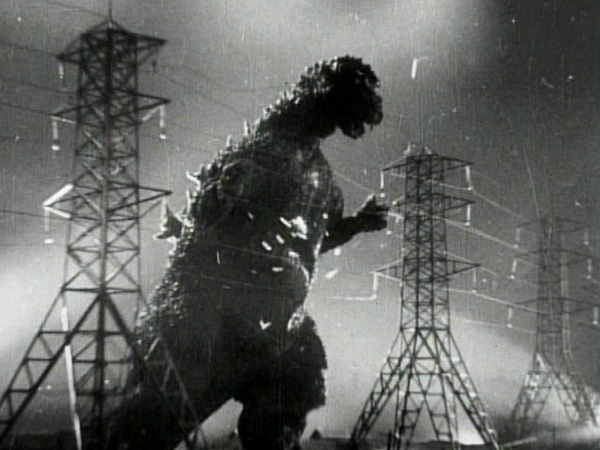
I am of course referring to Godzilla. You often see him around Christmas time, as a toy or on TV or if a cheapskate you know hates you enough to buy you the DVD of the American remake.

This also proves that the associations made in this piece were a lot more tenuous than they first appeared. And it ended up being something else entirely, probably not what most people expected at all. A more fitting analogy of the search for the Higgs would be hard to come by.

How exciting!

Twitter: @garwboy

StumbleUpon.com

Social Network sharing gubbins